I Know What You Did Last Summer (2025): an in-depth review
“what are you waiting for?”
In the age of teenage slashers and reboots, the eventual release of this film was inevitable. While the original 1997 film was never critically acclaimed, it made its mark in horror movie history. After releasing just months after “Scream,” when mystery slashers were at their peak, the film gained a lot of traction. The attention not only came from its original book adaptation plot but its star-studded cast that included ’90s icons such as Sarah Michelle Gellar, Ryan Phillippe, Jennifer Love Hewitt, and Freddie Prinze Jr. as its leading roles. This reboot does the same in that sense by casting actors with an already pre-made fanbase consisting of mostly teenagers. Its soundtrack is equally strategic, packed with songs that have dominated the charts in recent months. I Know What You Did Last Summer (2025) has all of the credentials for a successful horror reboot: the final girl, the nostalgia, the dynamic new characters that parallel the old ones. However, it felt as if the filmmakers focused too much on making a good reboot rather than making a good film.
The Plot
What ultimately made I Know What You Did Last Summer (1997) so captivating was its willingness to blur the lines between protagonist and antagonist. Viewers found themselves rooting for characters who had committed actions deemed unquestionably wrong. The first act, when Phillippe’s character commits vehicular manslaughter and each character commits to keeping it a secret, allows the viewer to feel the weight of that event on both parties. Yet, in the reboot, the event being kept secret is a car crash caused by one of the main characters standing in the road. The vast difference in these two scenes is that one could’ve resulted in prison for life and the other in bad publicity; the erasure of morally gray characters in this film loses the ethical tension that made the original so engaging.
While watching, it quickly became clear that nostalgia played a central role in the making of this film , not just as a tribute to the original I Know What You Did Last Summer, but to classic slashers in general. Making Hewitt repeat the iconic “What are you waiting for?!” line felt highly forced, Gabbriette’s character unmasking her killer before death as an ode to Casey Becker from Scream was noticed, and the overall plot points in the story felt recycled. It started off with meeting new characters, a murderous event happens, original characters get involved, and a beloved legacy character dies heroically saving the final girl in order to keep the franchise alive. It felt almost like an exact replica of nearly every modern-day horror reboot such as Scream, Texas Chainsaw Massacre, Halloween, and more.
Characters
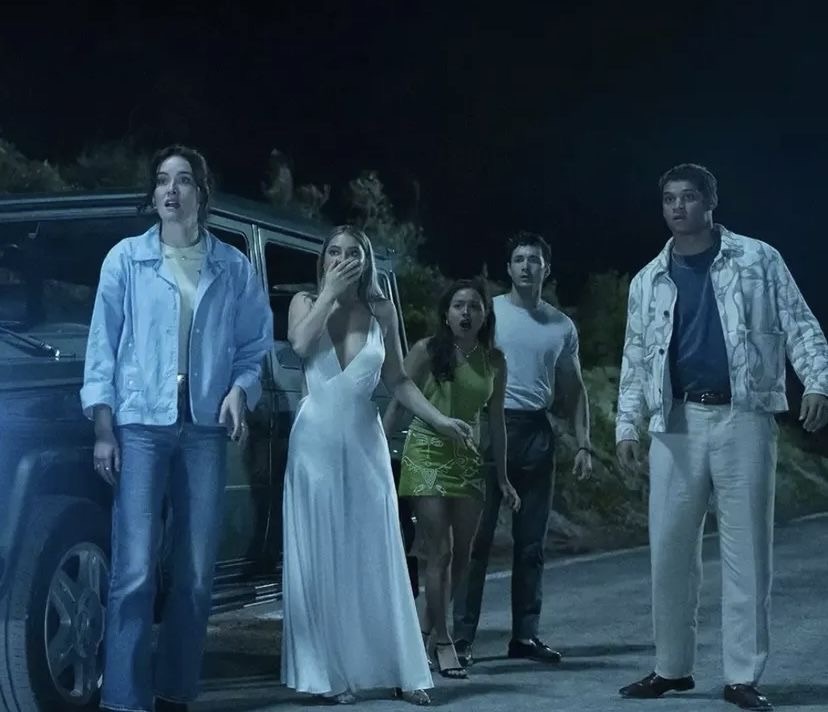
Each character in the film is blatantly just a carbon copy of someone from the original. The main character, Ava Brucks, is a fearless brunette who tackles the murders head-on and is destined from the start to be the final girl. Her blonde best friend, Danica Richards, is a blonde beauty queen who is often on edge. Danica is in a relationship with Teddy Spencer, a rich, hot-headed, impulsive man who ultimately caused the initial car crash. Meanwhile, Ava’s love interest is Milo Griffin, a brooding brunette with a faint moral compass who has the personality of a brick. Do these characters sound familiar? That is because they are exact copies of the original four protagonists, Julie, Helen, Barry, and Ray, lacking little to no original identity outside of them.
Nevertheless, it was enjoyable to see the new characters interact with their “prototypes.” The on-screen chemistry between Hewitt and Chase Sui Wonders felt natural. Watching the final-girl torch being passed on did not feel forced. Even though the screen time they had together was limited, it left a meaningful impression on fans of the franchise. Even though Helen Shivers did not survive the original film, that did not stop her from becoming a fan favorite. Therefore, it came as no surprise to see Sarah Michelle Gellar make a return in any way her character could. Therefore, the dream sequence scene between Helen and Danica was by far one of the best scenes in the film. It not only captured the iconic essence of Helen but the emotional depth to Danica.
The Ending
The ending is what ultimately makes or breaks a horror film, and unfortunately in this case it broke it. The reveal of the first killer, Stevie Ward, was done as good as any slasher mystery could be. She had a solid motive, and while her reveal was unexpected, the film subtly planted enough clues to make it feel earned. However, the ending starts to take a downfall during the reveal of the second killer — who happens to be legacy character Ray Bronson.
Making a legacy character the killer is a plot point a lot of horror franchises are afraid to tackle. In this case, it had the chance to be executed so well, but it happened to fall flat. This mainly has to do with Ray’s motive — which is to keep the original murders’ legacy alive, and helping Stevie seek revenge. For a character who watched his friends die due to these murders, those motives fall extremely out of character and just do not make sense in general. If it had been a motive tying to an original plot point or personal revenge, it would have been a great plot twist. What could’ve saved this ending is if Julie had more of a reaction to Ray, her ex-husband and fellow survivor, being a killer or if she was the one to kill him.
That being said, seeing the two best friends surviving and not the main couple was a refreshing twist. In a genre that so often favors love interests as the survivors, highlighting a platonic bond felt both unexpected and satisfying. It offered a glimmer of originality in an otherwise uneven finale.


 starsentials
Leave a comment